Neurosurgical Experience
Fusion Candidacy Review
Surgical Guidance
Dr. Zahos is a board-certified neurosurgeon with more than three decades of experience treating spinal, nerve-related, and cranial disorders. After studying at Yale University and George Washington University School of Medicine, he completed his neurosurgery residency and chief residency at Albert Einstein College of Medicine/Montefiore Medical Center.
His career includes leadership and academic roles at Cleveland Clinic Florida, UCSF School of Medicine, and New York Medical College, where he has served as a Clinical Assistant Professor of Neurosurgery since 2016.
Learn more about Level One Neurosurgery and its evidence-based, patient-centered approach.
Dr. Zahos does not recommend cervical fusion simply because an MRI shows degeneration. He reviews the patient’s symptoms, neurological examination, spinal alignment, stability, and the location of any nerve or spinal-cord compression.
When an operation is appropriate, he explains the diagnosis, proposed procedure, alternatives, and goals so the patient can make an informed decision.
Cervical fusion is performed to stabilize selected levels of the neck. It may be considered when disc disease, spinal-cord or nerve compression, instability, deformity, or another structural problem cannot be addressed appropriately through conservative care alone.
The presence of neck pain or an abnormal MRI does not automatically establish the need for fusion. Dr. Zahos evaluates whether the imaging findings correspond with the patient’s symptoms and whether stabilization is necessary to achieve the goals of surgery.
Cervical spine problems can produce neck pain as well as symptoms extending into the shoulders, arms, or hands. Numbness, tingling, or weakness may indicate nerve compression.
Spinal-cord compression can cause broader neurological changes, including difficulty with balance, walking, hand coordination, or fine motor tasks. These symptoms deserve prompt evaluation because they may reflect cervical myelopathy.
Posted on Google
 shynell mccall
Trustindex verifies that the original source of the review is Google.
I had a great experience with this doctor. He explains everything in a way that’s easy to understand, which I truly appreciate. Not only is he highly knowledgeable in his field, but he also takes the time to guide you through what to expect next and makes sure you understand the treatment plan. His professionalism, patience, and willingness to answer questions made me feel informed and confident in my care. I highly recommend him.Posted on Google Yuderki VilarMy love everything we talk today .and discuss about my problem..Posted on Google
 Miriam OdarI am thoroughly satisfied with Doctor Zahos’ bedside manner and his comprehensive explanation of the procedure. Additionally, his surgery coordinator, Kerry, is an exceptional professional and caring individual
The Level One Neurosurgery office at 140 Route 17 North, Suite 255 provides Bergen County patients with a convenient local setting for evaluating persistent neck pain and symptoms affecting the arms, hands, balance, or coordination. Conveniently located on Route 17, the office offers access to academic-level neurosurgical guidance without requiring an initial trip to New York City.
Some patients seek a second opinion after cervical fusion has been recommended. Others have MRI results showing abnormalities at multiple levels but are unsure which findings are causing their symptoms. Dr. Zahos carefully considers each patient’s medical history, neurological examination, imaging, previous treatments, and functional limitations before recommending the most appropriate next step.
Cervical fusion is one category of spinal fusion surgery. Its purpose is to stabilize selected vertebral levels when the diagnosed condition requires it.
Level One Neurosurgery’s documented procedures include anterior cervical discectomy and fusion, commonly called ACDF. This operation may involve removing disc material that is compressing a nerve or the spinal cord and stabilizing the treated level.
Whether ACDF is appropriate depends on the location of the compression, number of affected levels, spinal alignment, stability, and neurological findings.
Some patients have disease or instability involving more than one cervical level. These cases require careful planning to determine which levels are clinically significant and whether reconstruction is necessary.
Dr. Zahos has experience treating complex and multilevel cervical conditions. The extent of surgery is individualized rather than determined by the number of abnormalities listed on an imaging report.
Spinal-cord compression in the neck can affect more than the area around the cervical spine. Patients may notice difficulty with balance, walking, hand coordination, grip, or fine motor tasks.
Prompt myelopathy treatment begins with determining whether the spinal cord is compressed, which levels are responsible, and whether neurological function is changing.
Not every patient with cervical stenosis has myelopathy. Dr. Zahos evaluates the neurological examination and imaging together before discussing whether decompression and stabilization should be considered.
MRI may show the spinal cord, discs, nerves, and areas of narrowing. CT and X-ray findings may provide additional information about bone, alignment, and stability. EMG/NCS testing may be reviewed when clinically appropriate.
Level One Neurosurgery’s documented capabilities include navigation-guided spinal instrumentation, minimally invasive techniques, and advanced cervical fusion. These tools may support planning and instrumentation, but technology does not determine candidacy by itself.
The selected approach depends on the patient’s anatomy, diagnosis, neurological findings, spinal stability, and treatment goals.
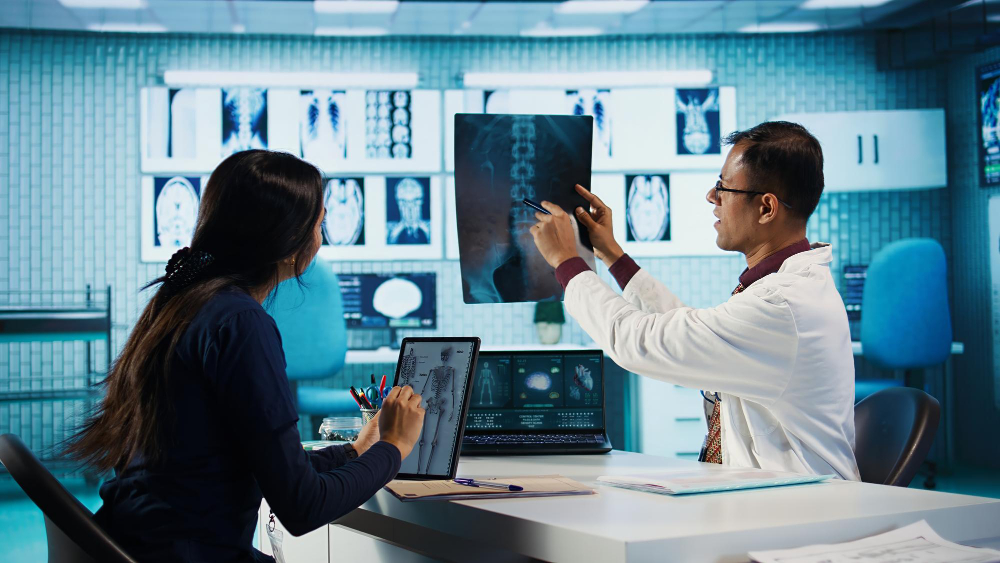
At Level One Neurosurgery, patients receive personalized evaluations grounded in academic neurosurgical experience and conservative-first decision-making.
Dr. Zahos explains what the imaging shows, whether it corresponds with the patient’s symptoms, and what alternatives should be considered. If cervical fusion is necessary, the goal and scope of the operation are discussed before the patient proceeds.