Do I Need Spinal Fusion?
Do you need spinal fusion? It usually depends on whether part of your spine is unstable, out of alignment or pressing on nerves in a way that other care hasn’t fixed. Dr. Peter A. Zahos starts with non-surgical care and recommends fusion only when your symptoms, exam and imaging all point to it.
What Decides Whether You Need Spinal Fusion
The decision to fuse rests on a few clinical factors.
- Fusion joins two or more vertebrae so they grow together and stop moving against each other.
- It’s mainly used to steady a segment that moves too much, straighten a deformity, or support the spine after pressure is taken off a nerve or the spinal cord.
- Pain by itself, or a finding on an MRI by itself, is rarely enough reason to fuse the spine.
- Non-surgical care usually comes first, unless nerve or spinal cord function is getting worse.
- Other operations, like removing a disc fragment or opening a narrowed canal, can sometimes fix the problem without fusion.
- Coming in for an evaluation is about getting clarity, and a visit can end with a plan that doesn’t involve surgery.
Signs You May Need Spinal Fusion
Fusion makes sense when the main problem is how the spine holds together, not only how much it hurts. These are the situations where it most often comes up.
A Vertebra That Has Slipped or Moves Too Much
With spondylolisthesis or instability across one or more levels, the bones can shift as you bend and stand. If that movement is pinching nerves or causing lasting symptoms, holding the segment still may be the fix.
Pressure on the Spinal Cord in the Neck
Cervical myelopathy can show up as a loss of hand dexterity, a weaker grip or unsteady walking. Freeing the cord often means removing a disc or bone, and the level is then fused to keep it stable.
Curvature or Collapse of the Spine
Kyphosis, other deformities and compression fractures can leave the spine bent forward or out of balance. Reconstructive fusion may be needed to bring it back into better alignment.
Decompression That Would Leave the Spine Unsteady
Some cases of stenosis need so much bone or joint removed to free the nerves that the segment would no longer be stable on its own. Fusion is then added to the same operation.

When Fusion Usually Isn’t the Right Answer
Back Pain Without Instability
Long-running back pain with a stable spine and no nerve pressure often responds to non-surgical care. Fusing a segment that isn’t moving abnormally may not change the pain.
MRI Findings That Don’t Match Your Symptoms
Disc wear, bulges and arthritis show up on many adult MRIs, including in people with no pain at all. What counts is whether the finding lines up with where you hurt and what your exam shows.
A Pinched Nerve From One Disc
When a single herniated disc presses on a nerve, removing only the piece causing the pressure may be enough, with no need to join the bones.
Care That Hasn’t Had a Fair Trial
If you haven’t yet given therapy, activity changes or pain management a real chance, and you have no worsening weakness, it’s usually reasonable to try those first.
Fusion also has tradeoffs. The fused segment no longer bends, healing takes time, and the levels above and below can carry more of the load over the years. They make sense only when fusion fixes a real structural problem.
Alternatives to Consider Before Fusion
Options that keep the spine moving can relieve symptoms. Which ones fit depends on your diagnosis, how long you’ve had symptoms and what you’ve already tried.
Non-Surgical Care
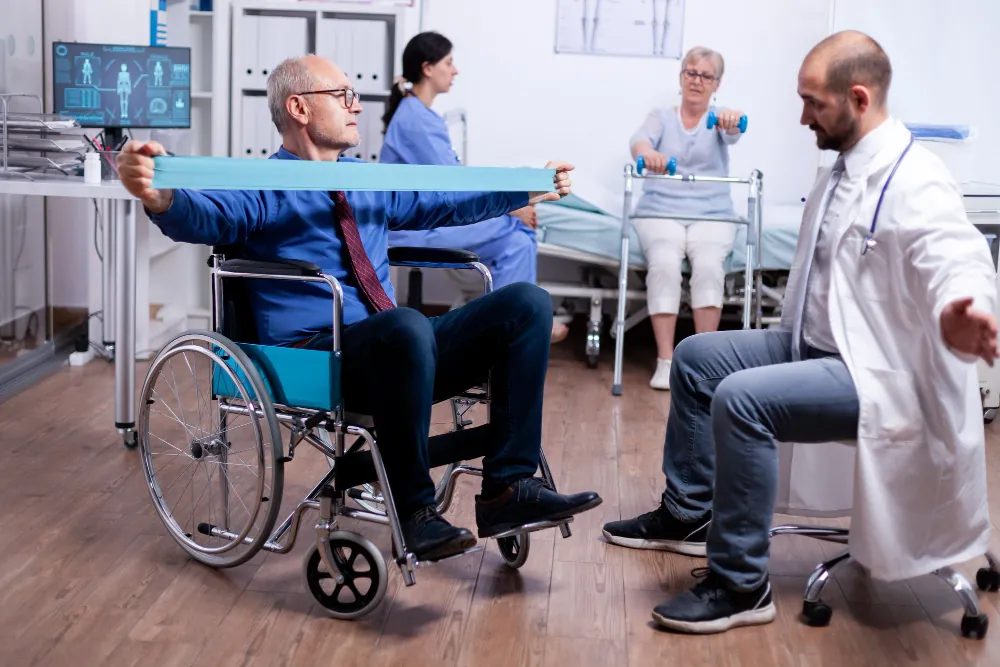
Physical therapy, medication, changes to daily activity and interventional pain management can calm nerve irritation and help you build strength while the problem settles.
Surgery Without Fusion
Microdiscectomy removes the part of a disc pressing on a nerve. Laminectomy and other decompression procedures open up space around the nerves. When the spine is stable, these can relieve symptoms while keeping its natural motion.
Minimally Invasive Techniques
When surgery is needed, minimally invasive approaches can treat the affected level through smaller openings, whether or not fusion is part of the plan.
What Dr. Zahos Looks At Before Recommending Fusion
After more than 30 years in neurosurgery, Dr. Zahos doesn’t decide from a scan alone. He puts several pieces together and explains each one to you.
- Your symptoms: where you feel pain, numbness or weakness, and how it affects walking, sleep and work.
- Your neurological exam: strength, reflexes, sensation, balance and coordination.
- Your imaging: MRI, CT and X-rays, including any films that show whether a segment shifts as you move.
- Nerve testing such as EMG/NCS when it helps sort out which nerve is involved.
- What you’ve already tried and how well it worked.
- Your goals and overall health.
If everything lines up, he’ll explain why. When fusion is the right step, he can use navigation-guided and robotic-assisted instrumentation for spinal fusion surgery in Paramus. If it isn’t, he’ll tell you that just as plainly.

Why a Second Opinion Helps Before Spinal Fusion
Fusion permanently changes how part of your spine moves, so it’s worth being sure. Another neurosurgeon’s view can confirm the plan, suggest a smaller operation, or show that more testing or non-surgical care should come first.
A second opinion on spine surgery is especially useful if the reason for fusion wasn’t clearly explained, if you were offered fusion at several levels, or if your symptoms don’t seem to match what you were told. Bringing the image discs, not only the written reports, lets Dr. Zahos look at the same scans your first surgeon used.
Serving Paramus and Bergen County
Patients from Hackensack, Ridgewood, Fair Lawn, River Edge and towns across Bergen County come to our office at 140 Route 17 North, Suite 255, in Paramus when they want to understand whether fusion truly fits their situation.
As a spine surgeon serving Paramus, NJ, Dr. Zahos gives every patient the time to go through their records and questions, without pressure to decide on the spot.
Do You Need Spinal Fusion? Questions From Patients Near You
Can physical therapy or injections help me avoid spinal fusion?
They can. Therapy, medication, activity changes or interventional pain management can ease symptoms without surgery. Fusion is usually considered when those haven’t helped or when there’s instability, deformity or worsening nerve function.
Is back pain alone a reason to have spinal fusion?
Usually not. Dr. Zahos looks for a structural cause, like a segment that moves too much or a deformity, that matches your symptoms and exam before he considers fusing the spine.
My MRI shows disc degeneration. Does that mean I need fusion?
Not necessarily. Disc wear is common with age and doesn’t always cause pain. What matters is whether it explains your symptoms and whether the spine is stable.
What happens if I wait on a recommended fusion?
It depends on why it was recommended. If pain is the main issue, there’s often time to weigh your options. New or growing weakness, numbness, balance trouble, or changes in bladder or bowel control should be checked promptly.
Is spinal fusion permanent?
Yes. Once the bones heal together, that segment no longer moves. That’s why we make sure the diagnosis and the reason for fusion are clear before you decide.
Will seeing a neurosurgeon mean I end up having surgery?
No. An evaluation with Dr. Zahos doesn’t automatically lead to surgery, and he starts with non-surgical care when it fits. His goal is to explain what’s going on and recommend surgery only when it’s needed.
Get Clarity About Your Brain or Spine Condition
Meet with board-certified neurosurgeon Dr. Peter A. Zahos for a personalized evaluation, imaging review, or trusted second opinion.