Neck and Back Pain From Desk Work
Neck and back pain from desk work usually builds up from long stretches in one position, with the head drifting forward and the lower back slumping into the chair. Small changes to your setup and your day often help. Pain that spreads into an arm or leg, numbness, weakness or pain that won’t ease is a reason to have a spine specialist take a look.
Key Facts About Neck and Back Pain From Sitting
If you spend your day at a computer and then sit through a long drive home, here’s what’s worth knowing.
- Staying in one position for hours is often a bigger factor than any single bad posture.
- A screen set too low or too far away tends to pull the head forward, which loads the neck and upper back.
- Commuting adds more sitting on top of a full workday, often in a seat that isn’t set up for your back.
- Regular breaks and a workstation that fits you are simple places to start.
- Pain that travels into an arm or leg, numbness, tingling or weakness can mean a nerve is involved and should be checked.
- A visit with a neurosurgeon is about finding the cause. Dr. Zahos starts with non-surgical care.
Why Hours at a Desk Wear on Your Neck and Back
When you sit still for most of the day, the same muscles, joints and discs carry the load hour after hour, and they can start to ache and stiffen.
Posture plays a part. As the day goes on, it’s easy to lean toward the screen, round the shoulders and let the lower back sink into the seat. The head is heavy, and the further it moves ahead of the shoulders, the harder the neck works to hold it up.
When Desk Pain Is a Sign of Something Else
Desk-related aches can come from muscle and joint strain. Sometimes, though, sitting makes an existing problem easier to notice, like a disc or narrowing in the spine that irritates a nerve. That’s why pain that changes or spreads deserves attention.

Long Commutes and Your Spine
If your workday starts and ends behind the wheel, stop-and-go traffic adds even more time sitting with little chance to shift around.
In the car, the seat is often too far back or reclined, so you reach for the wheel and your head drifts forward. A seat cushion that’s worn down can leave the lower back without much support. Add the habit of tensing the shoulders in heavy traffic, and it’s easy to see why some people feel worse after the drive than after the workday itself.
If your neck or back pain from a desk job flares mostly on the drive home, that pattern is worth mentioning at your visit. It helps us understand what sets your symptoms off.
Everyday Adjustments That May Help
These are general ideas, not a treatment plan. If something makes your pain worse, stop and talk with your doctor.
Set Up Your Workstation to Fit You
Raise the top of your screen to about eye level and keep it roughly an arm’s length away. Sit back in the chair so your lower back is supported, with your feet flat on the floor or on a footrest. Keep the keyboard and mouse close enough that your elbows stay near your sides. If you use a laptop for hours, a separate keyboard and a stand can keep you from looking down all day.
Take Short Breaks and Move
Get up every 30 to 60 minutes, even for a minute or two. Walk to refill your water, take a call standing up or step away from the screen between meetings. Changing position often matters more than finding one perfect way to sit.
Adjust Your Seat in the Car
Move the seat close enough that you can reach the wheel with a slight bend in your elbows, and keep the backrest fairly upright. A small rolled towel or lumbar pillow can support the curve of your lower back. On longer trips, stop when you safely can to stand and stretch your legs.
Warning Signs to See a Spine Specialist
Sore muscles after a long week at the desk often settle with rest and movement. These signs point to something that needs a closer look:
- Pain that spreads from the neck into the shoulder, arm or hand, or from the lower back into the buttock or leg
- Numbness, tingling or a pins-and-needles feeling
- Weakness, a weaker grip, fumbling with small objects or trouble with balance or walking
- Pain that doesn’t improve, keeps coming back or keeps you up at night
Sudden weakness or loss of bladder or bowel control needs emergency care right away.
Lower back or leg symptoms are covered by our back pain treatment in Paramus; neck or arm symptoms by our treatment for neck pain.
What a Visit for Desk-Related Pain Looks Like
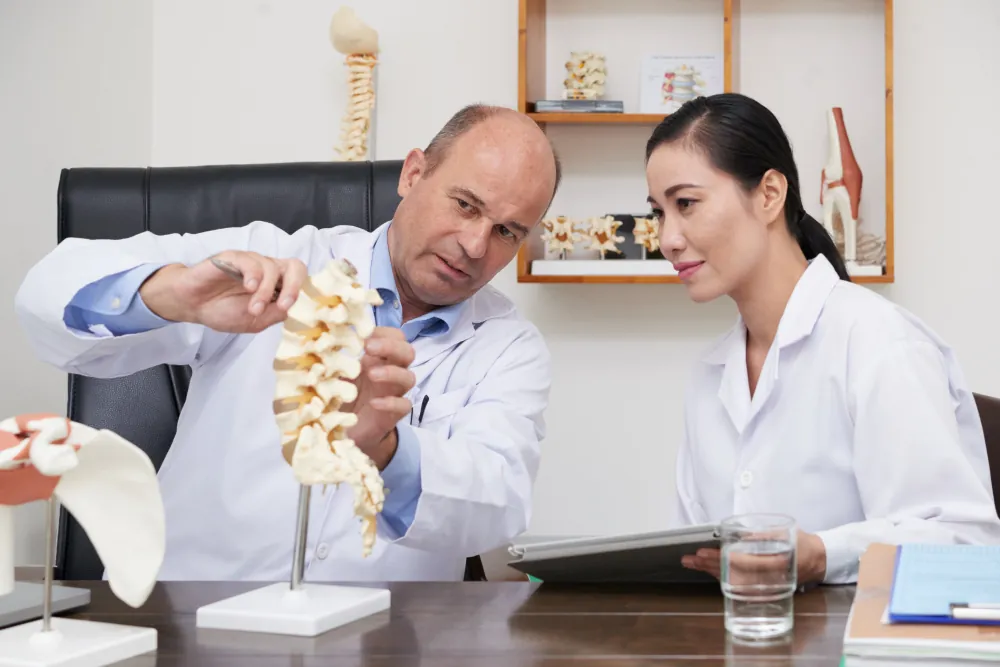
Dr. Peter A. Zahos is a board-certified neurosurgeon who starts with non-surgical care. At your visit, he asks how your workday and commute affect your pain, what you’ve already tried and where you feel symptoms.
He checks your strength, feeling and reflexes, and reviews any MRI, CT, X-rays or nerve testing (EMG/NCS) when they’re relevant. Then he explains in plain words what’s likely causing the pain and what makes sense next. Surgery enters the conversation only if your findings call for it.
Serving Paramus and Bergen County Commuters
If you drive Route 17, Route 4 or the Garden State Parkway to work, our office at 140 Route 17 North, Suite 255, in Paramus is an easy stop. We see patients from Paramus, Fort Lee, Hackensack, Ramsey, Fair Lawn and across Bergen County.
If desk work and driving have left you with pain that isn’t going away, you can have it looked at by a Paramus, NJ spine surgeon close to your daily route.
Questions About Neck and Back Pain From Desk Work Near You
Can sitting at a desk all day really cause neck and back pain?
It can contribute. Long hours in one position, a screen that pulls your head forward and little movement through the day can all strain the muscles and joints of the neck and back.
Is a standing desk better for my back?
It can help some people because it makes it easier to change position. Standing all day has its own strain, so switching between sitting and standing tends to work better than doing either one for hours.
How often should I take breaks from my desk?
A short break every 30 to 60 minutes is a reasonable goal. Even a minute of standing or walking gives your spine a change from the same position.
Why does my back hurt more after driving than after work?
A long commute adds more sitting, often in a seat that’s too reclined or too far from the wheel, with little room to move. Adjusting the seat and stopping to stretch on longer drives may help.
When should desk-related pain be checked by a neurosurgeon?
When it spreads into an arm or leg, comes with numbness, tingling or weakness, or doesn’t improve with time and simple changes. Sudden weakness or loss of bladder or bowel control needs emergency care.
Will I need surgery for neck or back pain from desk work?
Not usually. Dr. Zahos begins with non-surgical options and brings up surgery only if your exam and imaging point to a problem that needs it.
Get Clarity About Your Brain or Spine Condition
Meet with board-certified neurosurgeon Dr. Peter A. Zahos for a personalized evaluation, imaging review, or trusted second opinion.