What to Bring to a Spine Surgery Second Opinion
What to bring to a spine surgery second opinion: your images, the records behind the recommendation, and your own symptom history. With all three in hand, Dr. Peter A. Zahos can check the proposed operation against the full picture.
Your Second Opinion Checklist
Gather these before your appointment. If something is hard to get, call us and we’ll tell you what matters most for your case.
- MRI, CT and X-ray images on a disc or through a sharing link, plus the radiologist’s written report for each
- Any EMG or nerve conduction study results
- Office notes from the surgeon who recommended the operation, and the name of the procedure and spine levels they proposed
- Operative reports from any earlier spine surgery
- A list of treatments you’ve already tried, such as physical therapy, injections or medication, and how each one went
- Your current medications and supplements, with doses
- A short timeline of your symptoms and a list of your questions
Once you have these together, you’re ready for a second opinion for spine surgery in Paramus that looks at the evidence directly instead of relying on summaries.
Imaging to Bring to Your Spine Surgery Second Opinion
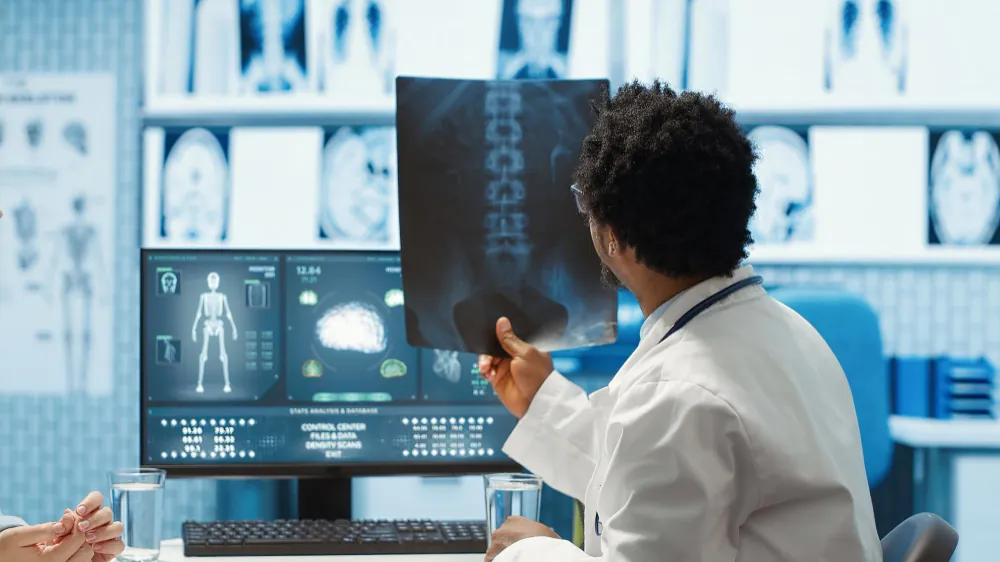
The radiology report is one person’s written summary. Dr. Zahos wants to look at the scans himself, because the size of a disc problem, the amount of narrowing and the exact level involved can read differently on the images than in a few lines of text.
Ask the imaging center for a copy of each study on a disc or as a download link. Bring every scan tied to your spine problem, not only the newest one. Older studies help show whether something has changed over time.
Check the Disc Before You Leave Home
Make sure the disc or link actually opens and has the images on it, not just the report. Label each one with the body area and the date. If you aren’t sure how to get your images to us, call the office and our team will walk you through it.
Records and the Surgical Plan You Were Given
A second opinion is really a review of a specific recommendation, so the most useful paper in your folder is the one that spells it out. Ask your first surgeon’s office for the note from the visit where surgery came up. It usually names the operation, the levels of the spine and the reasons behind it.
Also bring:
- Notes from your primary doctor, pain specialist or physical therapist that show what’s been tried
- Nerve testing results, if you had them
- Operative reports and discharge notes from any past spine surgery, since earlier hardware or scar tissue can change the options
Missing a page? Come anyway. Dr. Zahos can still examine you and look at what you have, and he’ll tell you if anything else would help.

Your Medication List and Symptom Timeline
Write down every medication you take, including the dose, plus vitamins and supplements. Note any blood thinners clearly. They matter for planning if surgery ends up being part of the discussion.
Then put together a one-page timeline of your symptoms. It doesn’t need to be perfect. Try to cover:
- When the pain, numbness, tingling or weakness started, and whether something set it off
- Where you feel it, and whether it travels into an arm or leg
- What makes it better or worse, like sitting, standing, walking or bending
- Changes in balance, grip, walking, or bladder or bowel control
- What you can no longer do at work or at home
This gives Dr. Zahos a way to line up your story with your scans and your neurological exam. Where they agree, and where they don’t, both shape his advice.
Questions to Ask at a Spine Surgery Second Opinion
Patients often leave an appointment and think of the question they meant to ask. Bring a written list so that doesn’t happen. A few worth having on it:
- Does my imaging explain the symptoms I’m having?
- Is the operation I was offered the right one for what you see?
- Are there treatments I haven’t tried that make sense first?
- What could happen if I wait, and what signs would mean I shouldn’t?
- If I do need surgery, what would recovery look like for someone with my job and daily routine?
It also helps to bring a family member or friend. A second set of ears can take notes while you focus on the conversation.
What Happens at the Visit
Dr. Zahos starts by going over your history and the treatment you’ve had so far. He then does a neurological exam, checking strength, sensation and reflexes, and reviews your images with you.
From there he explains what he sees and how it relates to your symptoms. He’ll tell you whether he agrees with the plan you were given, whether another approach is reasonable, or whether more testing would help before anyone decides. The decision stays yours, and he starts with non-surgical care when that’s a sound option.
For questions about scheduling, paperwork or benefits, call (201) 977-1445.
Serving Paramus and Bergen County
Bringing your scans and records to a neurosurgeon close to home can save you a long trip while you’re in pain. Our office at 140 Route 17 North, Suite 255, in Paramus is an easy drive from Teaneck, Englewood, Mahwah, Oradell and the rest of Bergen County.
Dr. Zahos is a board-certified spine surgeon in Paramus, NJ with more than 30 years of neurosurgical experience. Patients from across northern New Jersey and New York come to him when they want a careful, independent look before they commit to an operation.
Questions About Preparing for a Spine Surgery Second Opinion Near You
Do I need the actual images, or is the report enough?
Bring both if you can. The report is helpful, but Dr. Zahos wants to see the images directly. If you only have the report, call us and we’ll talk through your options.
Should I tell my first surgeon I’m getting a second opinion?
That’s up to you. Asking for your records is a routine request.
What if my scans are more than a year old?
Bring them anyway. Older images can show how things have changed. After the exam, Dr. Zahos will tell you if newer imaging would help.
Can someone come with me to the appointment?
Yes. A family member or friend can help you remember what was said and ask questions you might not think of.
How do I get my records and images to your office?
Call the office and our team will explain how to bring or send them before your visit.
Will I leave the visit with a clear answer?
Dr. Zahos will explain what he finds and what he recommends. Sometimes that’s a clear yes or no on surgery. Other times he may suggest more testing or another treatment first, and he’ll tell you why.
Get Clarity About Your Brain or Spine Condition
Meet with board-certified neurosurgeon Dr. Peter A. Zahos for a personalized evaluation, imaging review, or trusted second opinion.