Neurosurgical Experience
Diagnosis-Matched Treatment
Neurological Surgeon
A herniated disc occurs when material from inside a spinal disc pushes through its outer layer. The displaced material may irritate or compress a nearby nerve, but an abnormality on an MRI does not always explain a patient’s pain.
Symptoms depend on where the affected disc is located and which neurological structure is involved. A cervical disc herniation may cause neck pain or symptoms extending into the shoulder, arm, or hand. A lumbar disc herniation may cause lower-back pain, leg pain, numbness, tingling, or weakness.
Dr. Zahos compares the imaging findings with the patient’s symptom pattern and neurological examination before recommending treatment.
Dr. Zahos is a board-certified neurosurgeon with more than three decades of experience treating spinal, nerve-related, and cranial disorders. He completed his neurosurgery residency and chief residency at Albert Einstein College of Medicine/Montefiore Medical Center after studying at Yale University and George Washington University School of Medicine.
His career includes leadership and faculty positions at Cleveland Clinic Florida, UCSF School of Medicine, and New York Medical College, where he has served as a Clinical Assistant Professor of Neurosurgery since 2016.
Learn more about Level One Neurosurgery and the practice’s commitment to evidence-based, patient-centered care.
Posted on Google
 shynell mccall
Trustindex verifies that the original source of the review is Google.
I had a great experience with this doctor. He explains everything in a way that’s easy to understand, which I truly appreciate. Not only is he highly knowledgeable in his field, but he also takes the time to guide you through what to expect next and makes sure you understand the treatment plan. His professionalism, patience, and willingness to answer questions made me feel informed and confident in my care. I highly recommend him.Posted on Google Yuderki VilarMy love everything we talk today .and discuss about my problem..Posted on Google
 Miriam OdarI am thoroughly satisfied with Doctor Zahos’ bedside manner and his comprehensive explanation of the procedure. Additionally, his surgery coordinator, Kerry, is an exceptional professional and caring individual
The Level One Neurosurgery office at 140 Route 17 North, Suite 255 provides a local setting for Bergen County patients who need clarification after an MRI or who continue to experience neck, back, arm, or leg symptoms.
Some patients arrive unsure whether a disc finding is responsible for their pain. Others have already received a recommendation for surgery and want another opinion before proceeding. Dr. Zahos brings together the history, neurological examination, available imaging, previous treatment, and functional limitations to develop an individualized plan.
Patients who need a broader neurosurgical assessment can also learn more about seeing a spine surgeon in Paramus.
A microdiscectomy may be considered when herniated disc material compresses a nerve and clinically significant symptoms persist. During the procedure, the goal is to remove the disc material responsible for nerve compression.
Microdiscectomy is not appropriate for every herniated disc. Dr. Zahos determines candidacy based on symptoms, neurological findings, imaging, previous care, and the expected benefit of surgery.
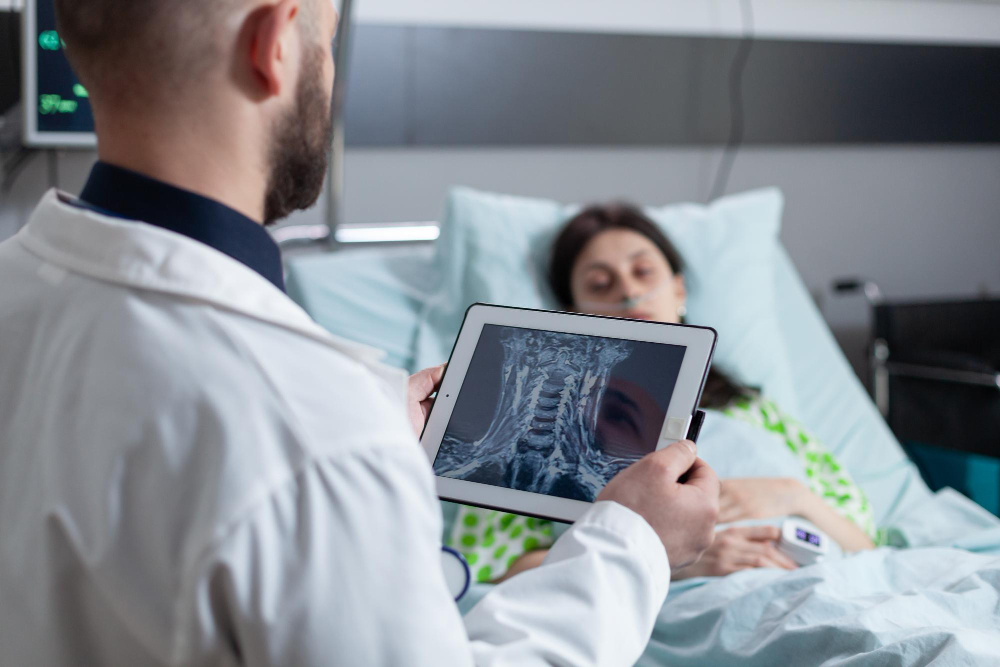
Level One Neurosurgery’s documented capabilities include minimally invasive spine surgery, navigation-guided spinal instrumentation, advanced imaging review, and cervical and lumbar surgical techniques.
Technology supports the treatment plan but does not replace clinical judgment. Dr. Zahos selects an approach based on the location of the herniation, the neurological structures involved, spinal stability, and the patient’s individual needs.