Diagnosis First
Personalized Plan
Neurosurgical Experience
Sciatica describes pain that travels along the path of the sciatic nerve, commonly from the lower back or buttock into the leg. Some patients also experience numbness, tingling, burning, or weakness.
The symptoms may be related to a herniated disc, spinal stenosis, vertebral instability, degenerative changes, or another source of nerve compression. Because several conditions can cause a similar pattern, effective treatment begins with identifying the underlying problem.
Dr. Zahos compares the patient’s symptoms and neurological examination with available imaging before recommending a treatment plan.
Sciatic symptoms often follow a recognizable path through the buttock, thigh, calf, or foot. The precise pattern may help identify which nerve is irritated or compressed.
An evaluation becomes particularly important when pain persists, affects walking or daily activities, or occurs with numbness or weakness. Worsening neurological symptoms may require more urgent assessment.
Dr. Zahos is a board-certified neurosurgeon with more than three decades of experience treating spinal, nerve-related, and cranial disorders. After studying at Yale University and George Washington University School of Medicine, he completed his neurosurgery residency and chief residency at Albert Einstein College of Medicine/Montefiore Medical Center.
His career includes leadership and faculty positions at Cleveland Clinic Florida, UCSF School of Medicine, and New York Medical College, where he has served as a Clinical Assistant Professor of Neurosurgery since 2016.
Learn more about Level One Neurosurgery and the practice’s evidence-based approach to spine and neurological care.
Seeing a neurosurgeon for sciatica does not mean surgery will automatically be recommended. Dr. Zahos considers whether symptoms can continue to be managed conservatively or whether nerve compression and neurological changes warrant an operation.
Patients receive a clear explanation of the diagnosis, available options, and the reasoning behind the recommended next step.
“Dr. Zahos was honest and kind. He explained that I didn’t need surgery at this time and advised me to reach out if anything changed.” — WebMD patient review
This feedback reflects the conservative-first philosophy at Level One Neurosurgery. Surgery is recommended only when Dr. Zahos believes it is medically necessary.
Posted on GoogleTrustindex verifies that the original source of the review is Google. I had a great experience with this doctor. He explains everything in a way that’s easy to understand, which I truly appreciate. Not only is he highly knowledgeable in his field, but he also takes the time to guide you through what to expect next and makes sure you understand the treatment plan. His professionalism, patience, and willingness to answer questions made me feel informed and confident in my care. I highly recommend him.Posted on GoogleTrustindex verifies that the original source of the review is Google. My love everything we talk today .and discuss about my problem..Posted on GoogleTrustindex verifies that the original source of the review is Google. I am thoroughly satisfied with Doctor Zahos’ bedside manner and his comprehensive explanation of the procedure. Additionally, his surgery coordinator, Kerry, is an exceptional professional and caring individual
The office at 140 Route 17 North, Suite 255 gives Bergen County patients a local setting for investigating leg pain that may originate in the lumbar spine. Its Route 17 location offers access to academic-level neurosurgical guidance without requiring an initial visit to New York City.
Some patients arrive after an MRI has identified a disc or stenosis but without a clear explanation of whether that finding accounts for their symptoms. Others have persistent pain despite previous care or want another opinion before an operation. Dr. Zahos evaluates the full clinical picture rather than treating an imaging report alone.
Patients who need a broader evaluation can learn more about seeing a spine surgeon in Paramus.
MRI may help identify a herniated disc, spinal narrowing, or another structural cause of nerve compression. CT, X-ray, and EMG/NCS findings may also be reviewed when clinically appropriate.
Imaging is interpreted together with the examination because degenerative changes do not always explain a patient’s symptoms.
When continued conservative care remains appropriate, Dr. Zahos explains why an operation may not be necessary. If substantial nerve compression is producing persistent or progressive neurological symptoms, he discusses whether surgery should be considered.
The plan is individualized around the diagnosis, severity of symptoms, neurological findings, previous treatment, and patient’s functional goals.
When disc material presses against a lumbar nerve, symptoms may extend from the lower back into the buttock, leg, or foot. Herniated disc treatment is based on the patient’s symptoms, neurological findings, imaging, and response to previous care.
Not every herniated disc requires surgery. When an operation is appropriate, a procedure such as microdiscectomy may be considered depending on the individual case.
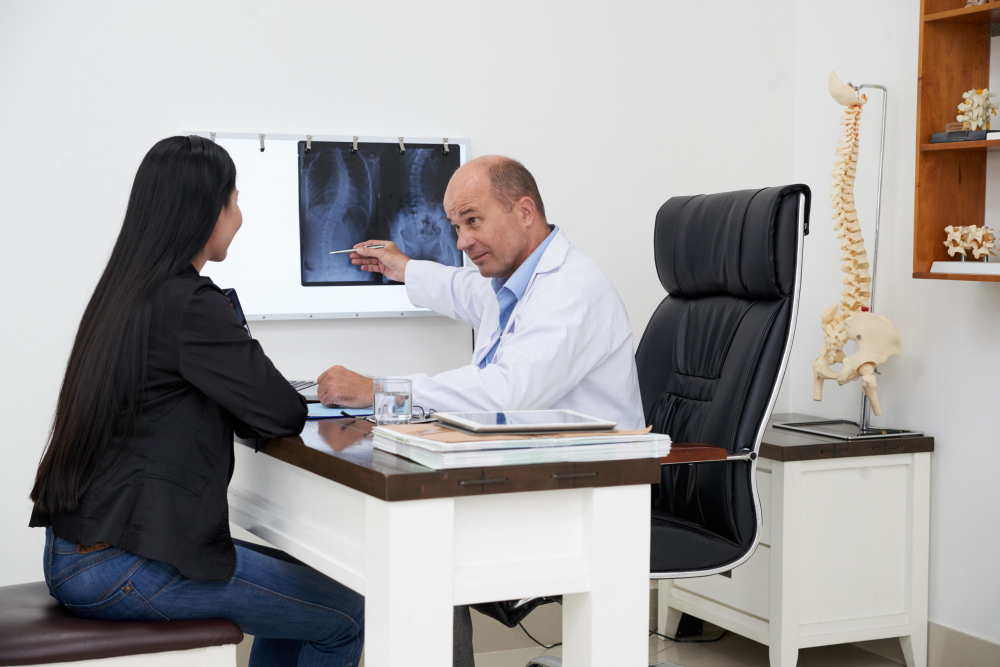
Level One Neurosurgery reviews MRI, CT, X-ray, and EMG/NCS findings when clinically appropriate. These diagnostic tools can help distinguish nerve compression from other potential sources of leg symptoms.
When surgery is medically necessary, the practice’s documented capabilities include minimally invasive spine techniques, navigation-guided spinal instrumentation, microdiscectomy, lumbar laminectomy, and advanced lumbar fusion. The selected approach depends on the diagnosis and spinal stability.

New patients should call or submit an appointment request to check current availability.